
Broadcast Basics
What Does an FM Transmitter Do?

An FM transmitter converts audio into a radio-frequency signal and amplifies it for transmission through an antenna. It is a core component of an FM broadcasting system, allowing radio programs to reach listeners over a specific coverage area.
The Basic Job of an FM Transmitter
At its core, an FM transmitter takes an audio signal -- from a microphone, mixer, computer, or media player -- and converts it into a radio frequency (RF) signal. "FM" stands for frequency modulation, which is the method used to encode the audio onto a radio wave. Instead of changing the wave's amplitude (like AM radio does), FM varies the frequency slightly to carry the sound information.
Once the audio is converted into this RF signal, the transmitter sends it out through a cable to an antenna. The antenna then radiates the signal into the air, where it travels outward in all directions until it's picked up by an FM receiver -- like the radio in someone's car, phone, or home stereo.
Three Pieces That Work Together
It's worth noting that a transmitter never works alone. To actually get a signal on the air, you need three components:
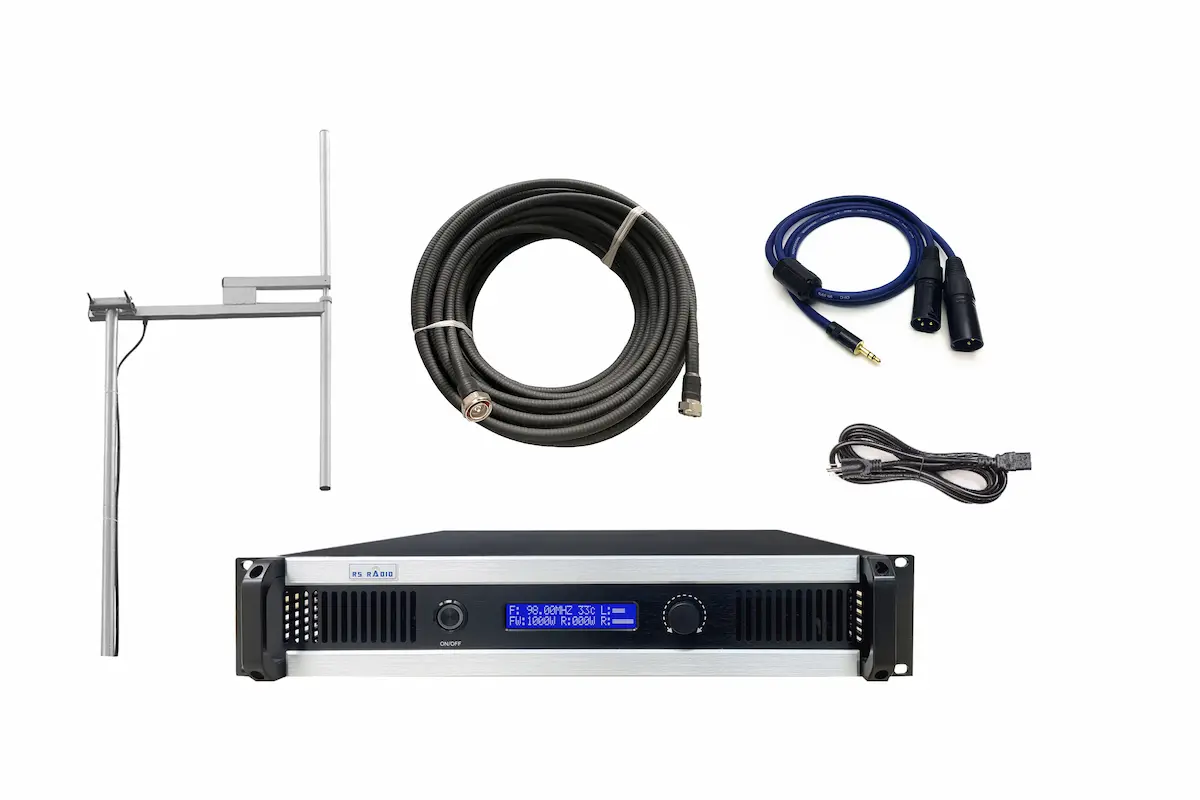
- The transmitter -- generates and modulates the RF signal from your audio source.
- The cable -- carries the RF signal from the transmitter to the antenna with minimal loss.
- The antenna -- radiates the signal into the air so receivers can pick it up.
Leave any one of these out, and you don't have a working radio station. They're often thought of as a package, even though each part can usually be bought and replaced separately depending on your setup.
How Far Can an FM Transmitter Reach?
This is one of the most common questions people ask, and the honest answer is: it depends. Broadcast range is influenced by several factors -- transmitter power being the biggest one, but also antenna height, terrain, obstructions like buildings or hills, and even weather conditions.
As a general rule, Customers who purchase transmitters typically require a coverage range of 1-150 kilometers. Please refer to one of my previous articles for details: How Far Can an FM Radio Transmitter Reach?
Where FM Transmitters Are Actually Used
FM transmitters show up in more places than most people realize. Some common examples include:
- 1. Community and religious broadcasts, including churches and temples
- 2. School and campus radio broadcasting
- 3. Drive-in movie theaters, where audio is sent directly to car radios
- 4. Farms and agricultural operations, for announcements across large properties
- 5. Factories and warehouses, for internal notifications
- 6. Corporate campuses, for meeting or event broadcasts
- 7. News and talk radio stations
- 8. Outdoor events and live broadcasts
- 9. Neighborhood and low-power community radio stations
- 10. Seasonal uses, like coordinating holiday light displays with music
- 11. Educational broadcasting for distance learning or campus-wide programming
The common thread across all of these use cases is simple: someone needs to send audio wirelessly to a group of listeners within a certain area, without relying on the internet or cellular networks.
Different Sizes for Different Needs
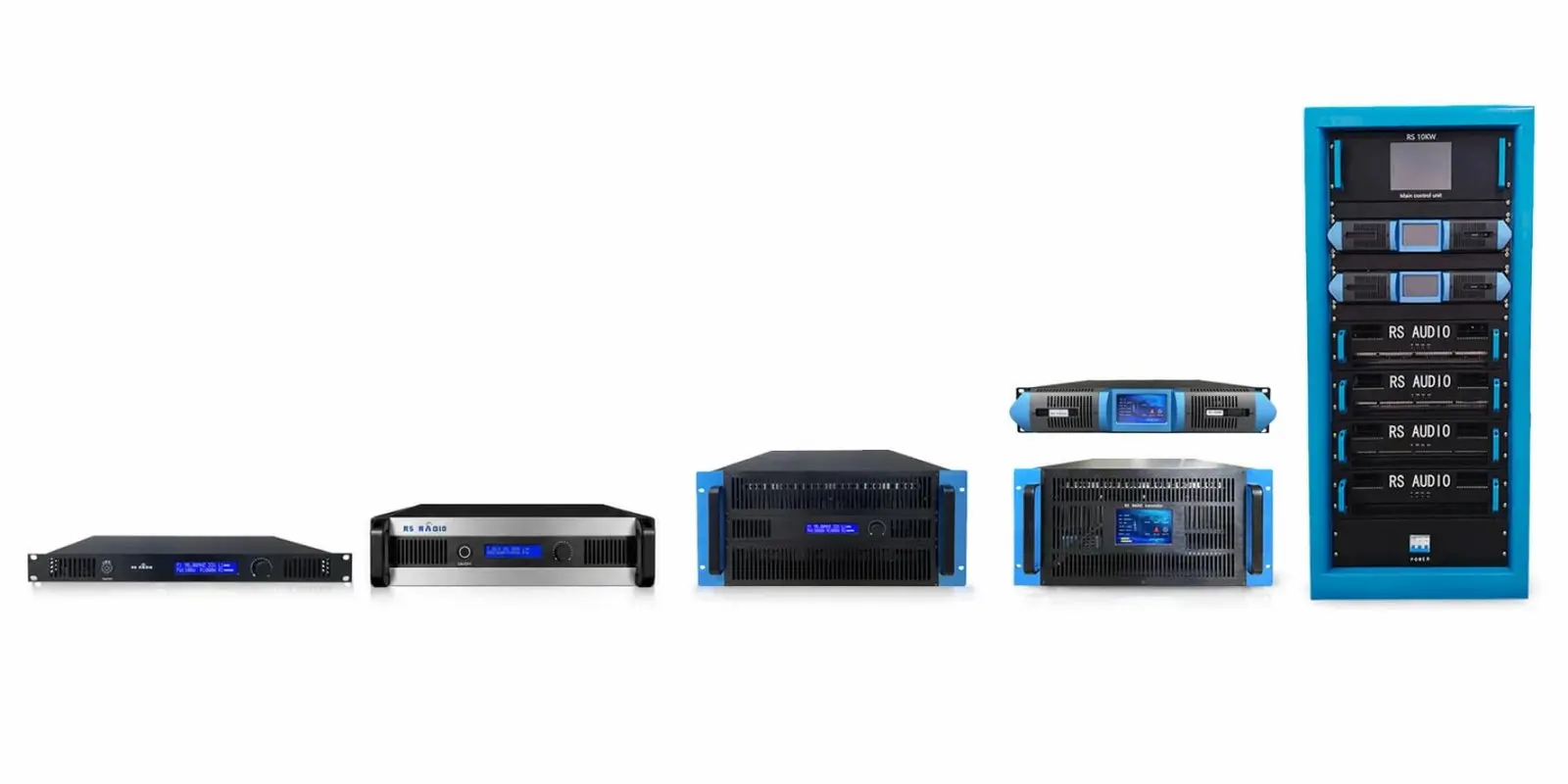
FM transmitters come in a wide range of power levels, generally starting around 30 watts and going up into the tens of kilowatts for large regional stations. Smaller units are often compact, sometimes just a single rack unit, making them easy to install in a small studio or office. Larger transmitters typically require dedicated equipment racks or cabinets and more careful attention to cooling and power supply.
The frequency band used for FM broadcasting is typically 87.5 to 108 MHz, which is the standard range picked up by ordinary FM radios around the world.
A Few Practical Things to Know
Anyone setting up an FM broadcast for the first time usually runs into a few practical questions along the way:
- Heat matters. Transmitters generate heat during operation, and most quality units include thermal protection that automatically reduces output or shuts down if internal temperatures get too high -- often somewhere around 60°C -- to prevent damage to internal components.
- Cable quality affects performance. A poor-quality or overly long cable run between the transmitter and antenna can introduce signal loss, reducing effective range even with a powerful transmitter.
- Antenna height and placement matter as much as power. Mounting an antenna higher, and away from obstructions, often improves coverage more than simply increasing wattage.
- Licensing requirements vary by country. Depending on where you're broadcasting and at what power level, local regulations may require a license or restrict which frequencies and power levels can be used legally.
In Short
An FM transmitter's job is straightforward at heart: turn audio into a radio signal, send it through a cable to an antenna, and let that antenna broadcast it into the air for anyone with an FM radio to receive. The details -- power, range, antenna choice, and setup -- are where things get more nuanced, but understanding this basic chain helps make sense of how radio, in all its forms, actually gets from a microphone to a listener's ears.