
Top 10 Types of FM Transmitters for Radio Broadcasting
FM transmitters are available in different power levels, designs, and configurations to meet the needs of different radio stations. In this guide, we’ll look at 10 common types of FM transmitters used in radio broadcasting and explain what each type is best suited for.
Classified by Power Output
Power output determines how far your FM signal can travel. RS RADIO offers a full range of low power FM transmitter, medium power, and high power FM transmitter solutions to match any broadcasting distance requirement.
1. Low Power FM Transmitter (30W-200W)
Low power FM transmitter are designed for small-area broadcasting applications. With an output power typically ranging from 30W to 200W, they are suitable for schools, churches, community radio stations, small event venues, and local information services. These units typically cover a broadcasting radius of 1-15 km.
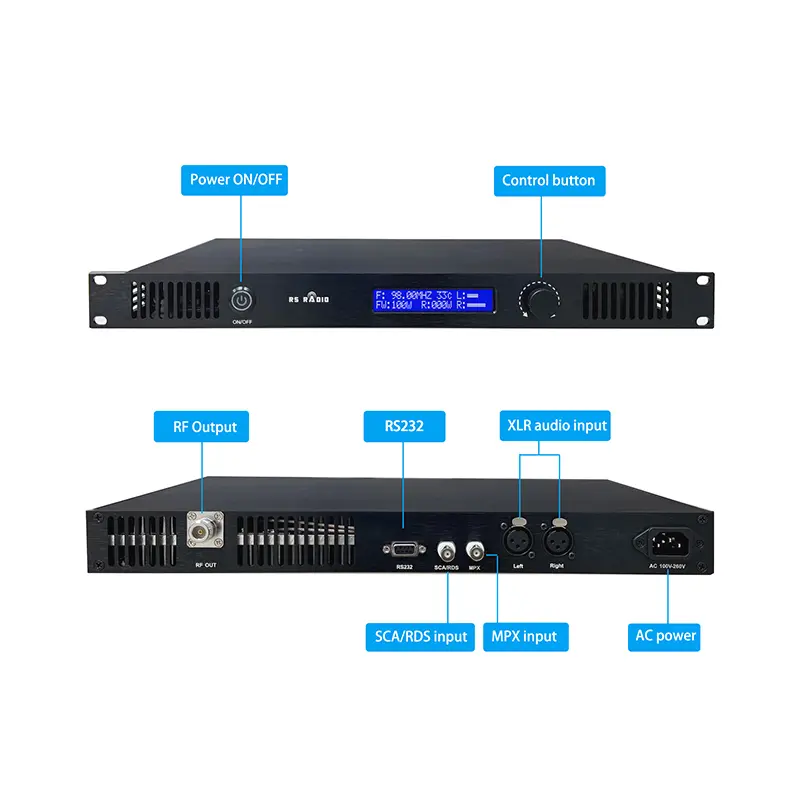
These transmitters are usually compact, affordable, and easy to install, which are a practical choice for organizations that need local coverage without the cost and infrastructure required by a large commercial station.
Typical power range: 30W, 50W, 100W, 150W, 200W
2. Medium Power FM Transmitter (300W-2000W)
Medium power FM transmitters are commonly used by regional radio stations, community broadcasters, universities, religious organizations, and small commercial stations. Their output power generally falls between several hundred watts and a few kilowatts, and broadcasting equipment dealers who need reliable mid-range coverage of 10-30 km.
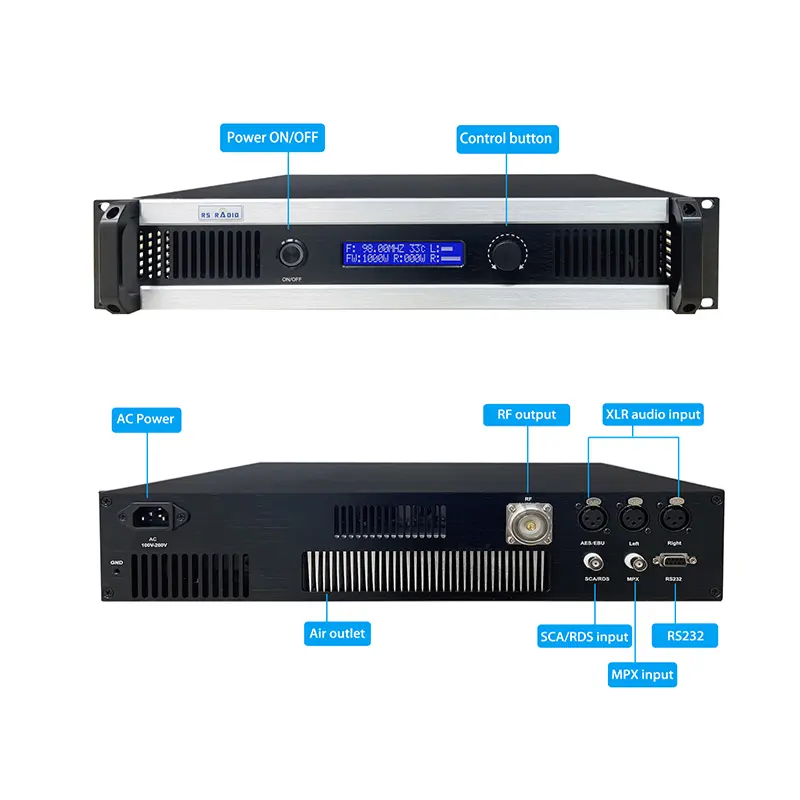
Compared with low-power models, medium-power transmitters provide wider coverage and better signal stability. Many models use solid-state RF amplifiers, digital monitoring, automatic protection, and standard rack-mount construction. Some systems also support RDS, remote control, and dual-exciter configurations.
Typical power range: 300W, 500W, 1000W, 2000W
This type of transmitter offers a balance between coverage, operating cost, and equipment investment. It is suitable for broadcasters that need to cover a town, campus, county, or other limited regional area.
3. High-Power FM Transmitters
High-power FM transmitters are designed for wide-area radio broadcasting. They are typically used by professional commercial stations, regional broadcasters, public radio networks, and national broadcasting organizations. Depending on the antenna height, terrain, frequency, and authorized effective radiated power, these systems can serve a large geographic area.
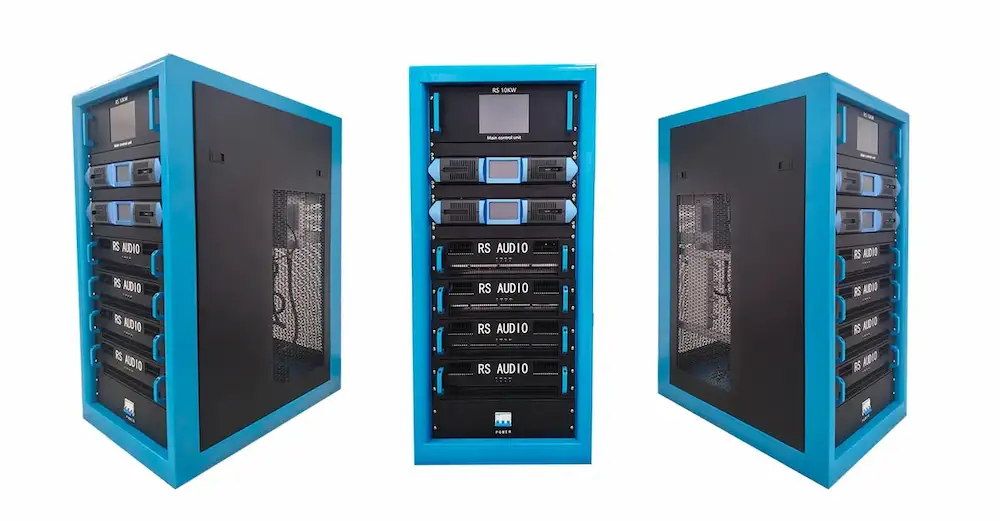
Most modern high-power FM transmitters use solid-state amplifier technology. Their main features may include high efficiency, modular power amplifiers, automatic protection, remote monitoring, and backup exciters. Modular designs allow engineers to replace or service individual amplifier modules without shutting down the entire system for an extended period. Some high-power systems can also be configured with multiple racks and power combiners to achieve higher output levels.
Typical power range: 3KW, 5KW, 10KW, 20KW
High-power transmitters require more than the transmitter cabinet itself. A complete installation may also need a suitable antenna system, transmission line, cooling equipment, electrical protection, grounding, lightning protection, and a stable power supply
Classified by Structure
The physical structure of an FM transmitter affects installation, portability, and scalability. Here are the three main structural types RS RADIO manufactures.
4. Rack Mount FM Transmitter
Rack mount FM transmitters are designed for professional broadcasting environments, standard 19-inch equipment racks common in radio stations and studios. Our 2U and 5U rack mount FM transmitter series offer excellent heat dissipation and easy integration with other studio equipment.
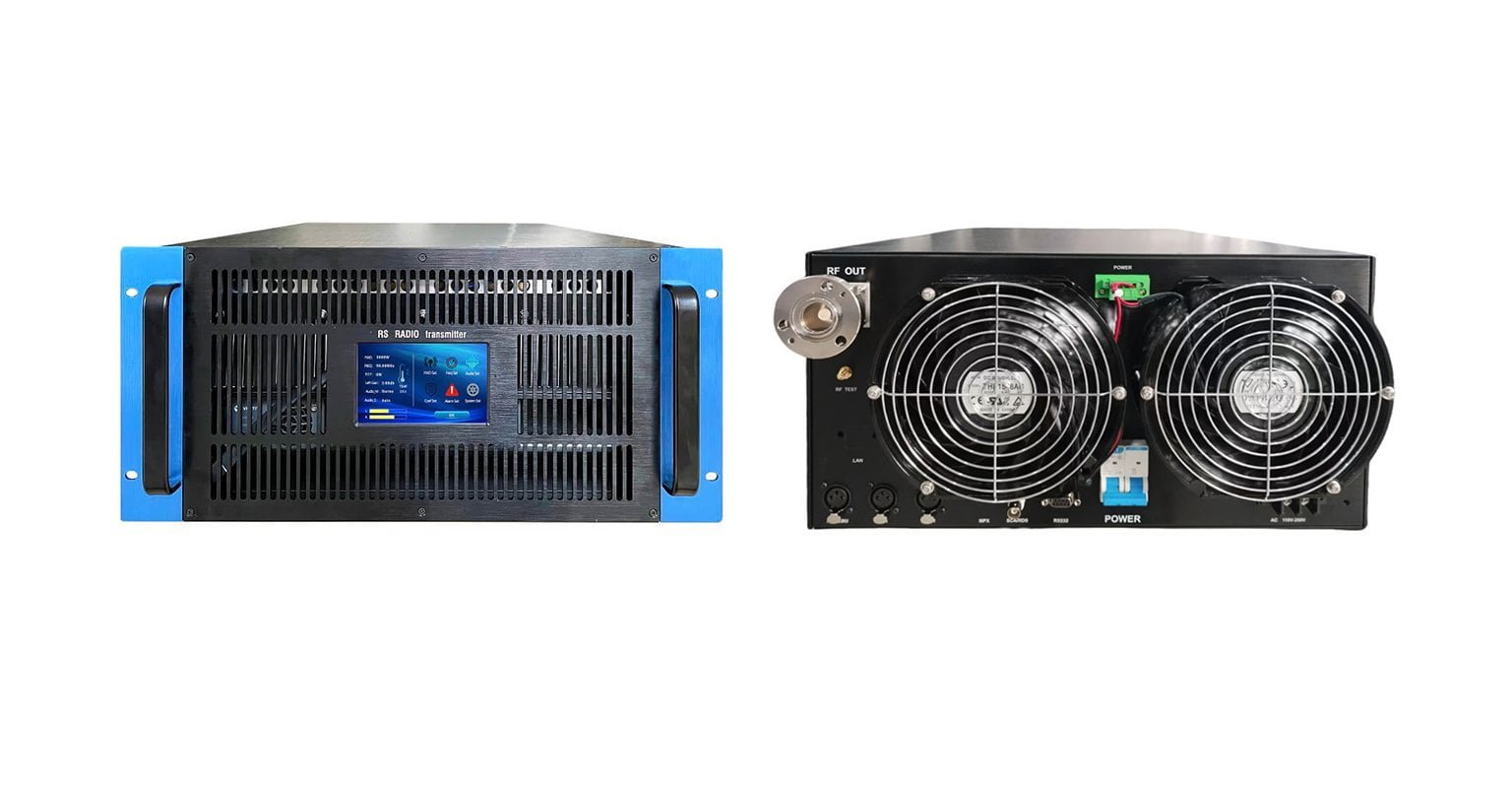
Best for: Professional radio stations, studios, permanent installations
Structure type: 2U, 5U rack-mountable chassis
5. Compact FM Transmitter
For customers needing portability or limited installation space, a compact FM transmitter is the practical choice. Our 1U single-unit series delivers reliable 50W-200W output in a lightweight, space-saving design — perfect for mobile broadcasting or temporary setups.
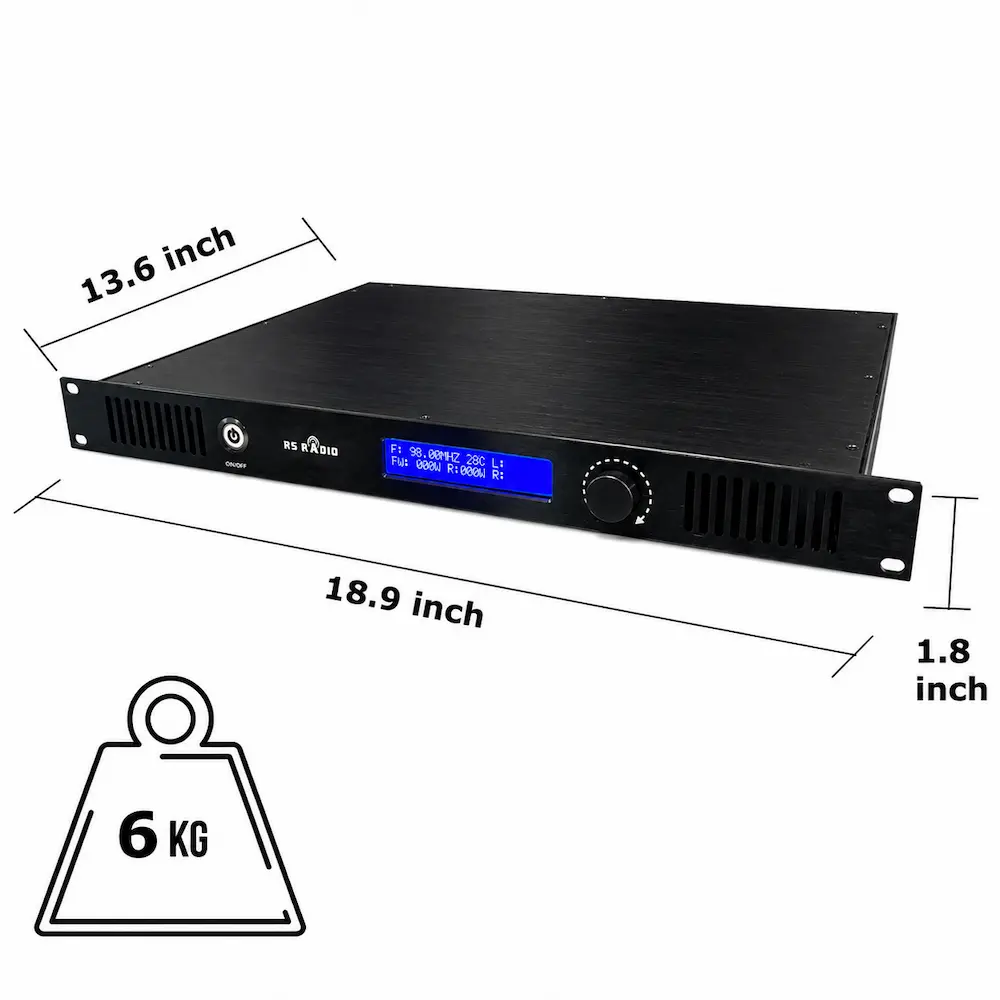
Best for: Mobile broadcasting, temporary events, limited-space installations
Structure type: 1U compact single units
6. Modular FM Transmitter
Modular FM transmitters use a tray/module-based design (particularly in our high power series), allowing individual power amplifier modules to be swapped or maintained without shutting down the entire system. This significantly reduces downtime for high-power broadcasting stations.
Best for: High-power stations requiring minimal downtime, technical broadcasters
Structure type: Multi-module tray-based cabinets (5KW and above)
Note: Module trays and transistor components are wear parts and require a parts fee for replacement, but all other minor accessories are provided free of charge under our 5-year warranty.
Classified by Function
Function-based classification helps customers understand what role each device plays in the broadcast chain.
7. FM Exciter
An FM exciter is the core signal-generating unit that modulates audio into an FM radio frequency signal at low power, which is then boosted by external amplifiers. Exciters are ideal for engineers building custom transmission chains or upgrading existing systems.
Best for: Engineers, custom system builders, transmitter upgrades
Function: Signal generation and modulation only (requires external amplifier for higher power)
8. Complete FM Transmitter System
A complete FM transmitter system integrates the exciter, amplifier, and control circuitry into a single ready-to-broadcast unit. This is the most popular choice for customers who want a plug-and-play solution without assembling separate components.
Best for: New radio stations, customers seeking simplicity and reliability
Function: All-in-one broadcasting solution, ready to connect to antenna and audio source
Classified by Package Configuration
Building a radio station requires more than just a transmitter, RS RADIO offers two package types to suit different customer needs.
9. Large FM Transmitter Package (Full Broadcasting Kit)
Our large FM transmitter package is a complete station-in-a-box solution, including the FM transmitter, antenna, cable, and audio broadcasting equipment such as microphones, mixers, and audio processors. This is ideal for customers starting a radio station from scratch who want everything from one supplier.
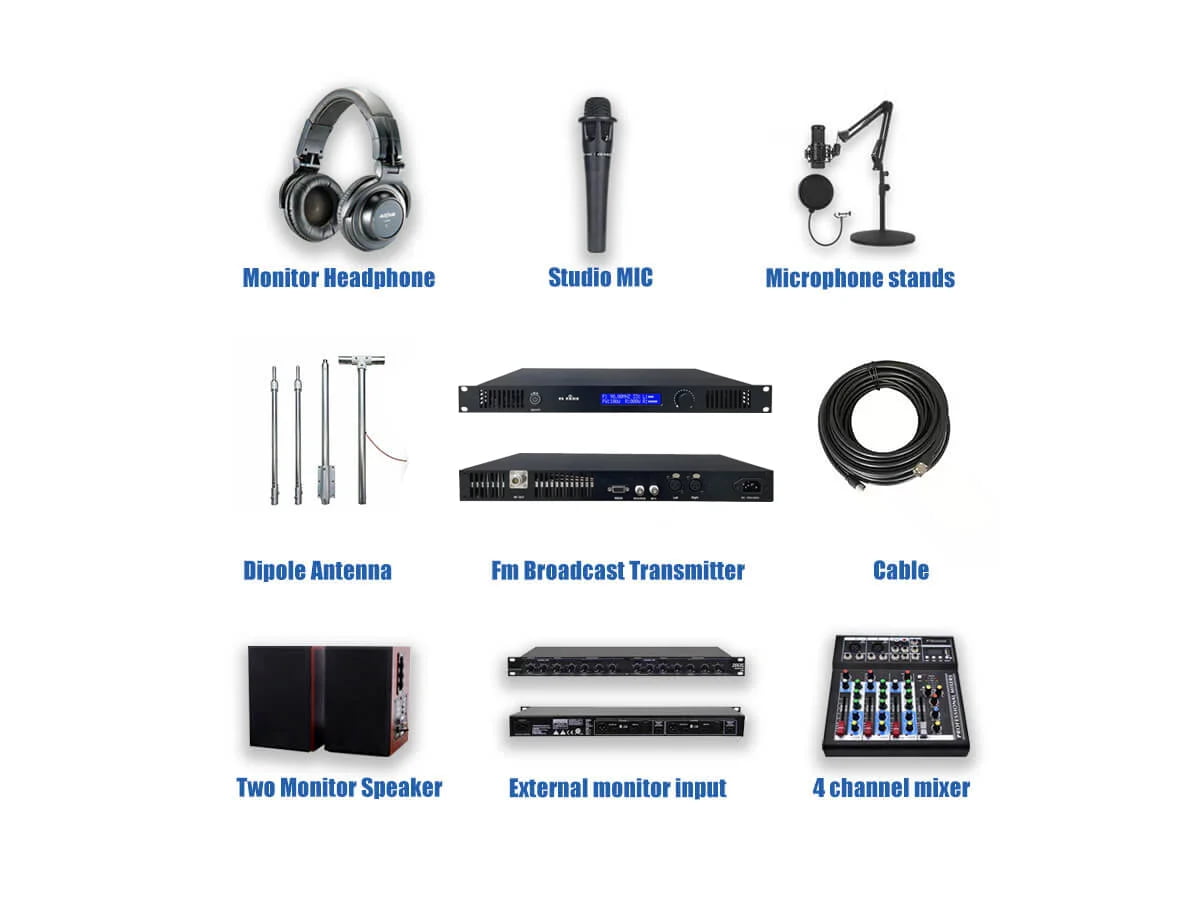
Includes: FM transmitter + antenna + cable + microphone + mixer + audio processor + accessories
Best for: New stations, churches, schools, and dealers wanting a turnkey solution
10. Small FM Transmitter Package (Essential Broadcasting Kit)
For customers who already have audio source equipment or simply want the core broadcasting hardware, our FM transmitter package includes only the essentials: the FM transmitter, matching cable, and antenna — everything required to get a signal on air.
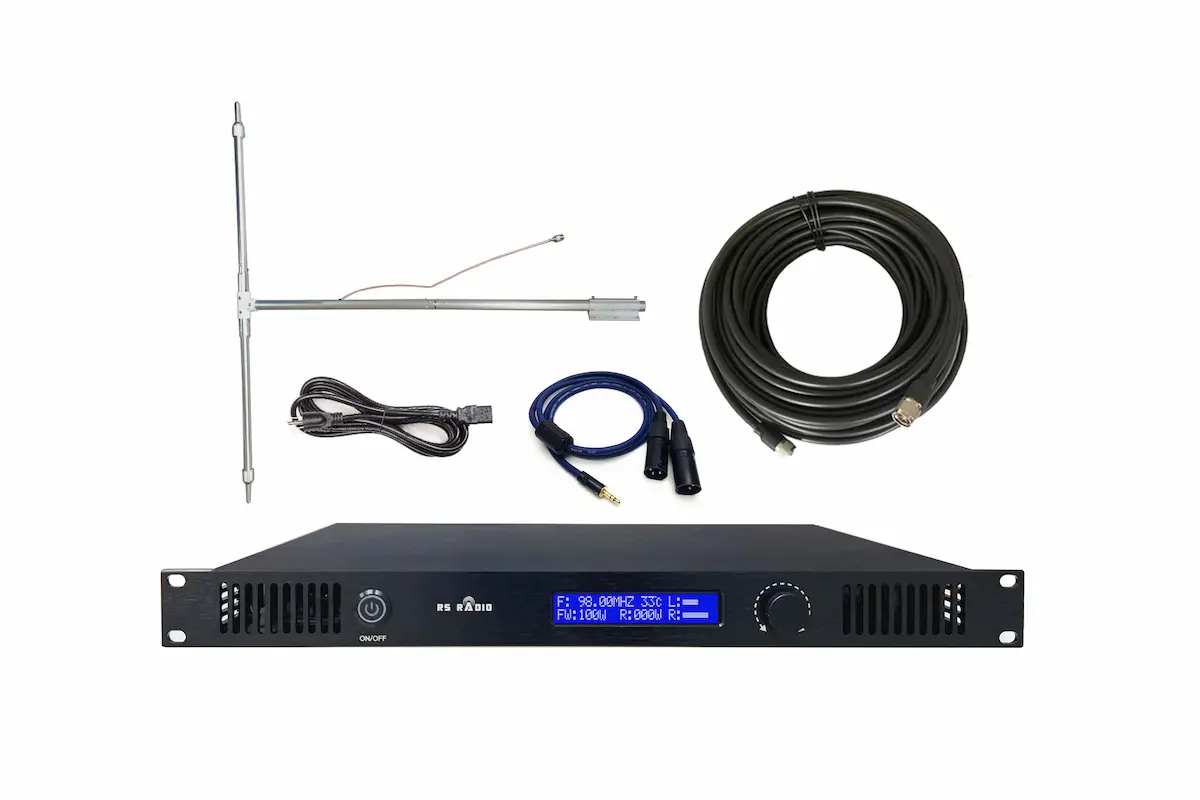
Includes: FM transmitter + cable + antenna
Best for: Budget-conscious buyers, experienced broadcasters, equipment upgrades
Conclusion
FM transmitters can be classified by power output, physical structure, function, and package configuration. Low-power models are suitable for small local areas, while medium- and high-power transmitters are designed for regional or wide-area broadcasting. Rack-mount, compact, and modular designs describe how the equipment is built, whereas exciters and complete systems describe the role of each component in the broadcast chain.
The best choice depends on the required coverage, operating hours, installation space, budget, maintenance capability, and local licensing requirements. Transmitter power alone does not determine coverage; antenna height, antenna gain, terrain, frequency, transmission-line loss, and regulatory limits are equally important.
Related Articles
High Power FM Transmitter: Everything You Need to Know
High Power FM Transmitter: Everything You Need to Know I work as broadcast engineer at RS Electronics for...
Read more
Common Mistakes When Installing FM Transmitters
Common Mistakes When Installing FM Transmitters I work as installation engineer at RS Electronics for nine years installing...
Read more
8 Best FM Transmitter Packages for Turnkey Radio Stations
8 Best FM Transmitter Packages for Turnkey Radio Stations I work as broadcast systems engineer at RS Electronics...
Read more