
FM Transmitter Guide
How Does an FM Transmitter Work?
The diagram below shows how an FM transmitter works:

The process is relatively straightforward and can be broken down into five key steps:
- Audio Input — Audio from a microphone, mixer, or other source is fed into the FM transmitter.
- FM Modulation — The audio signal modulates the frequency of a carrier signal, creating the FM broadcast signal.
- RF Amplification — The modulated RF signal is amplified to the required output power for transmission.
- Filtering — The amplified signal is filtered to reduce unwanted harmonics and spurious signals.
- Transmission — The clean RF signal travels through a coaxial cable to the FM antenna, which converts it into radio waves for broadcast.
For a deeper understanding of this topic, continue reading below:
1 What Is an FM Transmitter?
An FM transmitter is an electronic device that modulates an audio signal onto an 87.5-108 MHz (or the applicable local frequency band) carrier wave, then radiates that RF signal into the air through an antenna so it can be received by any standard FM radio within range.
Types of FM Transmitters: Low-Power Car/Home Devices vs. Broadcast-Grade Transmitters
Not all "FM transmitters" are built for the same purpose. It is important to distinguish between small consumer-grade gadgets and professional broadcast equipment before choosing the right device for your project.
Low-Power Car/Home FM Transmitter

- Typical output power: a few milliwatts (mW)
- Coverage range: only a few meters to a few dozen meters
- Common use: playing phone audio through a car stereo, small personal audio streaming
- No external antenna or professional installation required
- Not designed for continuous 24/7 operation
- Cannot legally or technically operate as a public radio station
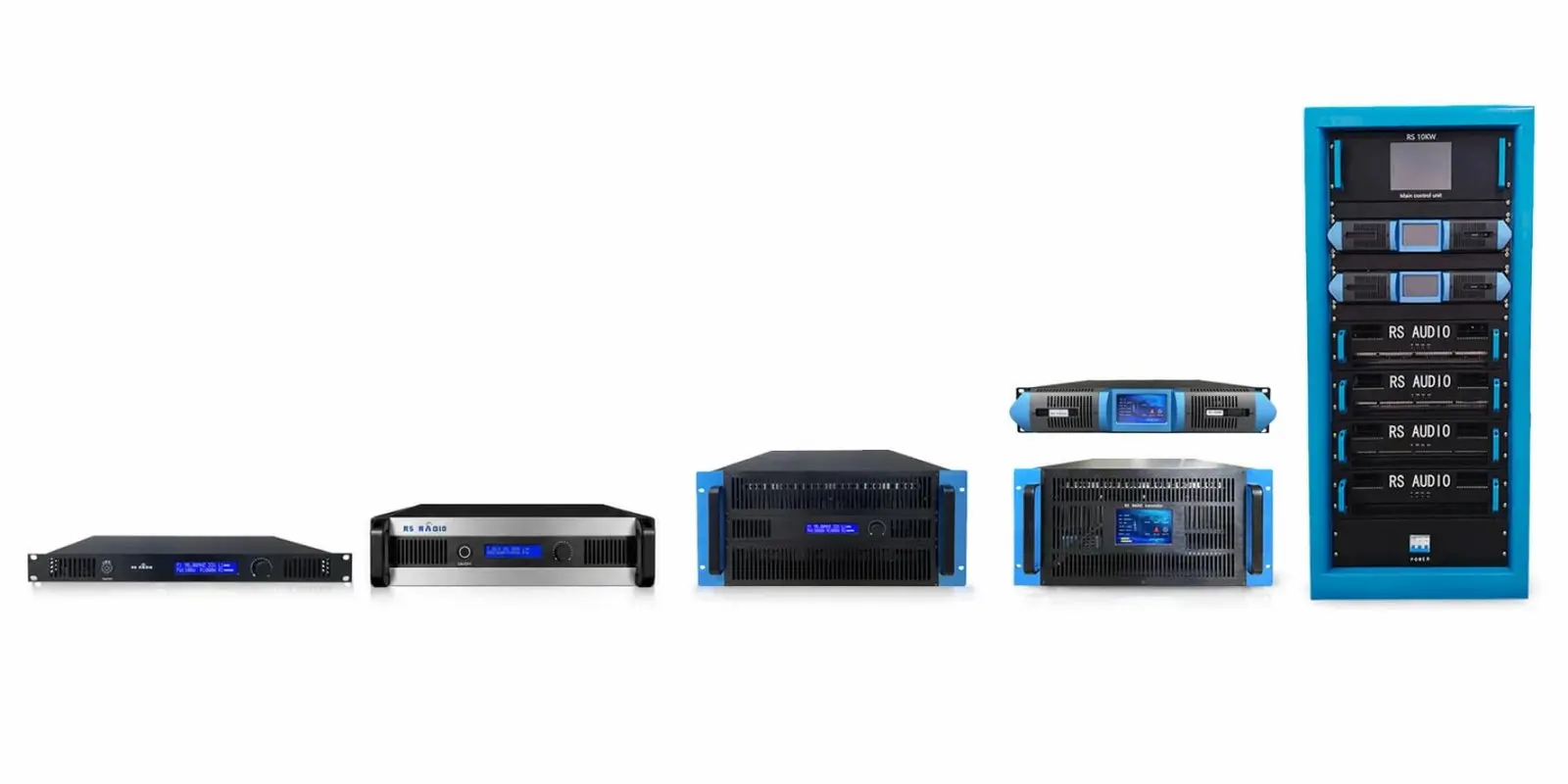
- Typical output power: 30W to 20KW
- Coverage range: from several kilometers up to a whole city or region, depending on power and antenna height
- Common use: radio stations, church broadcasting, school FM stations, community and commercial radio
- Requires a dedicated antenna, coaxial cable, and proper installation
- Built for continuous 24/7 operation with thermal protection
- FCC/CE certified equipment suitable for legal broadcasting operations
2 How Does an FM Transmitter Work?
At its core, an FM transmitter takes a low-power audio signal and transforms it into a radio wave strong enough to travel through the air. This process happens in five key stages inside the transmitter -- from the moment audio enters the system to the moment it leaves through the antenna.

Audio Input
An audio source -- microphone, mixer, or media player -- feeds a sound signal into the transmitter. Risheng transmitters accept XLR and SCA inputs. At this stage the signal is a low-voltage waveform with no ability to travel through the air on its own.

FM Modulation
The audio signal modulates a high-frequency carrier wave, varying its frequency rather than its amplitude. A PLL synthesizer generates a stable carrier within the 87.5-108MHz band and locks it precisely to your selected channel, preventing drift and interference.
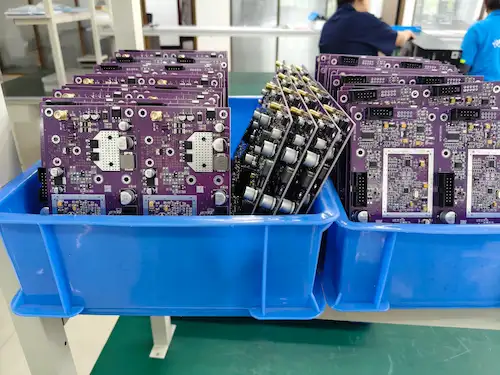
RF Power Amplification
The weak modulated signal is boosted to rated output power, from 30W to 20KW depending on the unit. High-efficiency RF transistors generate heat, so Risheng transmitters include cooling fans and thermal protection: at 60°C the unit reduces output or shuts down to prevent damage.

Filtering
The amplified signal passes through a low-pass or band-pass harmonic filter that suppresses unwanted byproducts at multiples of the carrier frequency, which could interfere with TV or aviation signals. This step ensures compliance with FCC and CE emission standards.
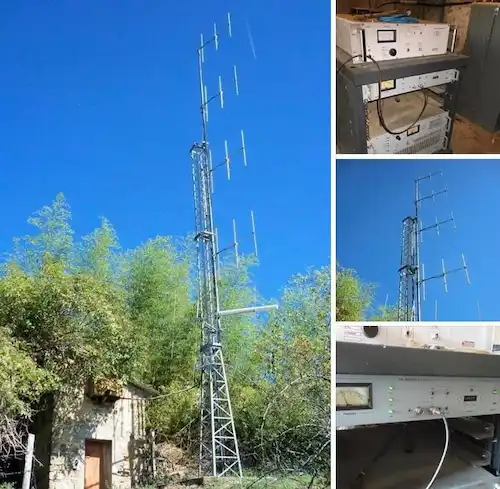
Antenna
The signal travels via coaxial cable to the antenna, which converts it into electromagnetic waves radiated into the air for radios to receive. Antenna height, gain, and cable quality directly affect coverage range and clarity.
3 FM Transmitter Signal Flow
Putting all five stages together, the complete signal path of an FM broadcast system looks like this:
In short: the audio source generates sound, the transmitter modulates and amplifies it into a radio wave, the filter cleans up the signal, the coaxial cable carries it to the antenna, and the antenna radiates it into the air. From there, any FM radio receiver tuned to the correct frequency can pick it up and turn it back into sound. Every link in this chain matters -- a weak cable or mismatched antenna can undo the work of even the most powerful transmitter.
4 Common Questions
What is the difference between FM and AM transmitters?
FM (frequency modulation) transmitters vary the carrier wave's frequency to encode audio, resulting in clearer sound with less static and better resistance to interference. AM (amplitude modulation) transmitters vary the wave's strength instead, which allows signals to travel farther but with lower audio fidelity. FM is the preferred choice for music and high-quality voice broadcasting, while AM is more common for long-distance talk radio.
How often does an FM transmitter need maintenance?
Under normal operating conditions, most FM transmitters require only periodic visual inspection and dust cleaning every few months to prevent overheating. Cables and connectors should be checked annually for wear or corrosion, especially in outdoor installations. RS RADIO transmitters also include built-in overheat protection that activates at 60°C, reducing the risk of damage between maintenance checks.
How do I choose the right power and antenna system?
Start with your desired coverage radius and work backward using a power-to-distance reference table, then account for antenna height, gain, and local terrain. As a general rule, a taller, higher-gain antenna can achieve greater coverage with less transmitter power, while a low-mounted antenna may require significantly higher wattage to reach the same distance. Our team can help you match a transmitter, antenna, and cable set to your specific site conditions.
What frequency range do FM transmitters operate in?
Most FM broadcast transmitters, including RS RADIO models, operate within the standard 87.5-108MHz FM band used worldwide, allowing compatibility with virtually any FM radio receiver.